


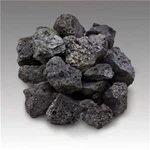


Manganese Product
Your Professional Manganese Product Manufacturer
We are a professional manufacturer in Ferroalloy and Metal industries, we have many complete production lines! The factory covers an area of 95,000 square meters, Our common products are Silicon Metal, Ferro Silicon, Silicon Calcium alloy, Ferro Manganese, Silicon Manganese, Cored Wire, etc.
Why Choose Us
Our factory
We have our own processing factory and cooperate with many professional manufacturers to ensure the smooth production of products and product quality assurance.
Team Advantage
We have a professional management team to provide customers with product services and support in all aspects from production, sales, logistics, etc.
Production Scale
TF Industrial Co.,Ltd further expanded its factory scale and now has a complete modern production line consisting of 6 submerged arc furnaces and 10 intermediate frequency furnaces.
Sale Market
We have established long-term and stable cooperative relationships with customers in many countries and regions around the world, and our products are exported to Europe, North America, India, Japan and other places.




Properties of Manganese
With a melting point of 1,246°C and boiling point of 2,061°C, manganese is paramagnetic, though it forms both paramagnetic and ferromagnetic alloys. It demonstrates a wide range of oxidation states from -3 to +7, facilitating its role in various chemical reactions.
When exposed to air, manganese develops an oxide film, offering protection to its interior. It reacts with oxygen and water in powdered form, and its compounds exhibit diverse magnetic properties.
Types of Manganese Product
Manganese is a metal mineral with a wide distribution in nature. Almost all kinds of ores and silicate rocks contain manganese. Depending on the process, include:
Silicon Manganese
Silicon Manganese is an alloy composed primarily of silicon (Si) and manganese (Mn), carbon (C), and other elements in varying proportions. This alloy is produced through a smelting process in an electric arc furnace, involving the reaction of manganese ore, quartz (silicon source), and iron ore.
Medium Carbon Ferro Manganese
Medium Carbon Ferro Manganese refers to an alloy composed primarily of iron (Fe) and manganese (Mn), with trace amounts of other elements. This alloy is commonly used in the production of steel and other alloys. The term “ferro” in Medium Carbon Ferro Manganese denotes the presence of iron, and the alloy's composition typically includes a higher percentage of manganese than iron.
Electrolytic Manganese
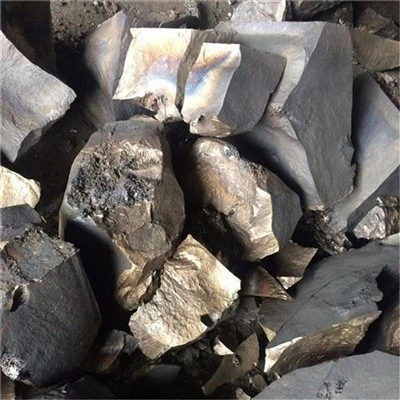
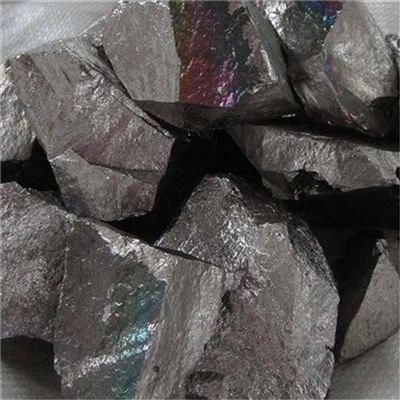
Electrolytic manganese has the look of iron and is an irregular flaky substance.It has a firm but brittle texture, shiny on one side and rough on the other.
Magnesium Ingot
Magnesium ingot is a new type of lightweight and corrosion-resistant metal material, which is mainly used in four fields, namely, magnesium alloy production, aluminum alloy production, steel desulfurization, aviation and military industry. Magnesium ingot has the advantages of small specific gravity, high strength per unit weight and high chemical stability, and is widely used in aluminum-magnesium alloy and its magnesium die casting.
High Carbon Ferro Manganese
High Carbon Ferro Manganese is an alloy composed of manganese and iron, and also contains silicon, carbon, sulfur and impurities brought by manganese ore. High Carbon Ferro Manganese has a high melting point and anti-oxidation properties, it is an important deoxidizer and alloy additive, which is widely used in the fields of iron and steel metallurgy, foundry, electronic industry and so on. Blast furnace method and electric furnace method are the two methods of smelting HCFeMn.
Low Carbon Ferro Manganese
Low Carbon Ferro Manganese is made from manganese ore, which is smelted in blast furnaces and electric furnaces. Low Carbon Ferro Manganese is mainly used in the welding industry. It is an important ingredient in the manufacture of high-strength low alloy steels and stainless steels. Low Carbon Ferro Manganese is also a major component in the manufacture of mild steel welding electrodes and other electrodes.
Specification of Manganese Alloys
|
Grade |
Mn (%) |
C (%) |
Si (%) |
P (%) |
S (%) |
|
High-carbon (HC) FeMn |
76-82 |
6-8 |
≤1.5 |
≤0.25-0.3 |
≤0.02-0.05 |
|
Medium-carbon (MC) FeMn |
80-85 |
1-2 |
≤1.2-3 |
≤0.25-0.3 |
≤0.02-0.05 |
|
Low-carbon (LC) FeMn |
85-90 |
0.1-0.5 |
≤1-1.5 |
≤0.15-0.25 |
≤0.02-0.05 |
Production Processes of Manganese
To make manganese, manganese ore needs to first be collected. Mining is often done in open manganese-rich pits. There are also ways to collect manganese from seabeds but these methods aren't very cost-effective. After it's collected, it needs to be extracted and refined before it can be used.
There are three main manganese production processes—hydrometallurgical, electrolytic, and smelting. Hydrometallurgical processes use chemical reactions to extract manganese–one of these is leaching. This method uses an acid or alkali to dissolve the manganese from the source, which is then treated to extract the manganese.
Electrolytic processes involve passing an electric current through a liquid that has manganese ions in it. The manganese then collects on the electrodes as a metal with a high purity level. Smelting processes give us manganese alloys like ferromanganese and silicomanganese. With smelting, manganese oxides are heated in a furnace with other materials like carbon or aluminum.
Uses of Silico Manganese
Silicon and manganese in silicon-manganese alloy have a strong affinity with oxygen. When the silicon-manganese alloy is used in steelmaking, the resulting deoxidation products MnSiO3 and MnSiO4 melt at 1270°C and 1327°C respectively, with a low melting point, large particles, and easy to float. , good deoxidation effect, and so on.

Spring steel
General steel contains 0.15%-0.35% silicon, structural steel contains 0.40%-1.75% silicon, tool steel contains 0.30%-1.80% silicon, spring steel contains 0.40%-2.80% silicon, stainless acid-resistant steel contains 0.40%-2.80% silicon. Stainless acid-resistant steel contains 3.40%-4.00% silicon, heat-resistant steel contains 1.00%-3.00% silicon, and silicon steel contains 2%-3% or higher.
Production of high quality steel
Manganese can reduce the brittleness of steel, improve the hot workability of steel, and increase the strength, hardness, and wear resistance of steel. “Without manganese, no steel will be made”, manganese consumed by the steel industry accounts for more than 90% of its output. Manganese is an indispensable functional basic raw material for the production of high-quality steel. It can remove impurities such as sulfur and oxygen during the steelmaking process, and improve the physical properties of steel by improving strength, hardness, and wear resistance.

Ferromanganese and silicon manganese are both added raw materials in steelmaking, mainly used to remove oxygen from steel and increase the toughness and strength of steel. They are indispensable substances in steelmaking.
The main elements of ferromanganese and FeMn are manganese and iron, followed by phosphorus, sulfur, and carbon. Ferromanganese can be divided into high, medium, and low carbon ferromanganese according to the difference between manganese and carbon.
Silicon manganese, FeSiMn, is mainly composed of silicon, manganese, and iron, followed by phosphorus, sulfur, and carbon. Silicon and manganese can be divided into two grades, 6517 and 6014, depending on the content of silicon and manganese.
Both can be used as deoxidizers and alloy additives. Silicon manganese alloy is a commonly used composite deoxidizer in steelmaking, as well as a reducing agent for the production of medium and low carbon ferromanganese and the production of metallic manganese by electrosilicothermic method.
Company Certificates
We have complete and independent trade export rights


FAQ