


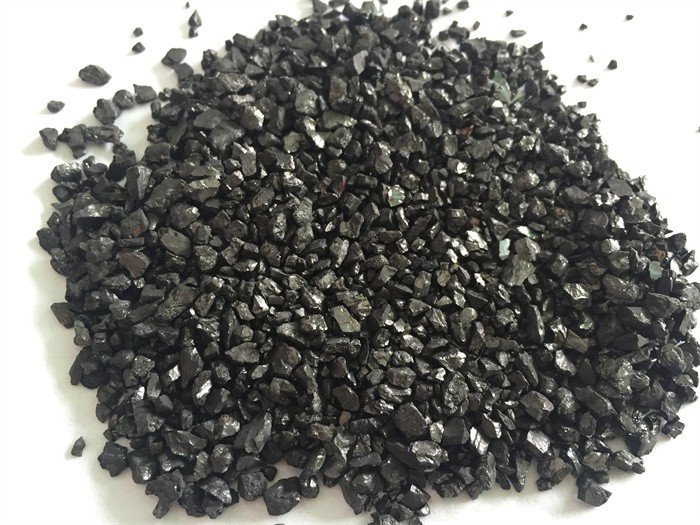
Low Aluminum Inoculant Ferro Silicon
Product Overview
Designed for Stable Graphite Nucleation and Consistent Gray & Ductile Iron Production
Low Aluminum Ferro Silicon Inoculant is a specially refined metallurgical material developed for gray iron and ductile iron foundries that require controlled aluminum levels during the inoculation process. Unlike conventional ferrosilicon, this grade introduces less aluminum into the molten iron while providing effective graphite nucleation. Under appropriate process conditions, it helps reduce the tendency for aluminum-related inclusions and supports consistent graphite development.
Manufactured from carefully selected raw materials under controlled electric furnace smelting conditions, our Low Al FeSi is designed to provide stable chemical composition and consistent inoculation performance from batch to batch. It is widely used in the production of precision, pressure-containing, and safety-critical iron castings where excessive aluminum may influence slag formation, graphite morphology, or casting consistency.
Technical Specifications & Chemical Composition
To meet the requirements of modern foundries, both major alloying elements and trace impurities are carefully controlled. Typical chemical composition is shown below.
|
Element |
Standard Low-Al Grade |
Ultra-Low Al Grade |
Custom Range Available |
|
Silicon (Si) |
72.0% – 75.0% |
74.0% – 78.0% |
Per Request |
|
Aluminum (Al) |
≤ 0.50% |
≤ 0.10% |
Tailored to Process |
|
Calcium (Ca) |
0.50% – 1.00% |
0.30% – 0.80% |
Optimized for Inoculation Performance |
|
Carbon (C) |
≤ 0.10% |
≤ 0.05% |
Controlled |
|
Sulfur (S) |
≤ 0.02% |
≤ 0.01% |
Controlled |
|
Phosphorus (P) |
≤ 0.03% |
≤ 0.02% |
Controlled |
Available Particle Sizes & Delivery Methods
Particle sizes are available to suit different inoculation methods and help achieve predictable dissolution behavior and stable silicon recovery.
• In-Stream / Late Inoculation: 0.2–0.7 mm | 0.5–1.0 mm
• Ladle Inoculation: 1.0–3.0 mm | 3.0–8.0 mm
• Automatic Feeding Systems: 3.0–10.0 mm | 5.0–15.0 mm
Low Aluminum FeSi Instead of Standard Ferrosilicon
For many modern foundries, silicon recovery is only one factor when selecting an inoculant. Trace elements introduced during inoculation can also influence casting quality and process consistency.
Aluminum acts as a deoxidizing element, but excessive aluminum introduced through standard ferrosilicon may contribute to aluminum oxide inclusions and, under certain foundry conditions, may increase the tendency for subcutaneous pinhole defects, particularly when moisture and hydrogen are present in the molding system.
The Solution: By controlling aluminum input while maintaining balanced inoculating elements such as calcium, Low Aluminum Ferro Silicon helps maintain a cleaner molten iron system, supports stable graphite nucleation, and improves production consistency during continuous casting operations.
Key Metallurgical Benefits
Helps Reduce the Risk of Hydrogen-Related Pinhole Defects by limiting unnecessary aluminum input during inoculation.
Supports Uniform Graphite Morphology by promoting stable graphite nucleation in both gray iron and ductile iron.
Helps Reduce Chill Tendency and Carbide Formation, particularly in thin-wall or fast-cooling castings.
Contributes to More Consistent Machining Performance by reducing the presence of abrasive oxide inclusions within the iron matrix.
Supports Stable Mechanical Properties by helping reduce batch-to-batch metallurgical variation during continuous production.
Industrial Applications
Low Aluminum Ferro Silicon Inoculant is widely used in foundries producing castings where stable graphite formation and controlled impurity levels are important.
Automotive Components: Engine blocks, cylinder heads, brake components, and transmission housings requiring consistent microstructure and machining performance.
Pumps, Valves & Hydraulic Components: Castings where low defect rates and stable pressure integrity are important.
Wind Energy & Heavy Machinery: Large ductile iron castings, machine tool bases, and structural components requiring consistent mechanical properties.
Ductile Iron Pipes & Fittings: Continuous production lines where stable nodularity and controlled inoculation fading are required.
Industrial Practices
The optimum addition rate depends on molten iron chemistry, casting design, inoculation method, and production conditions.
|
Inoculation Method |
Suitability |
Recommended Size |
Technical Notes |
|
Ladle Inoculation |
Highly Suitable |
1–3 mm / 3–8 mm |
Addition during ladle filling helps improve inoculation efficiency. |
|
In-Stream Inoculation |
Recommended |
0.2–0.7 mm / 0.5–1 mm |
Suitable for late inoculation and continuous pouring systems. |
|
Automatic Feeding Systems |
Highly Suitable |
1–3 mm / 3–10 mm |
Controlled particle sizing provides good flowability for automated dosing equipment. |
Quality Control & Global Supply
Consistent inoculation performance depends on consistent manufacturing. Every production batch is manufactured under a controlled quality management system in our ISO 9001:2015 certified facility.
Raw Material Selection: Carefully selected low-impurity silica and qualified reductants are used to support stable product quality.
Controlled Smelting Process: Smelting parameters are monitored throughout production to maintain the target chemical composition.
Chemical Analysis: Each production batch is analyzed using Optical Emission Spectrometry (OES). Additional ICP analysis can be provided when required.
Particle Size & Moisture Control: Screening equipment ensures a controlled particle size distribution with limited fine particles, while moisture is managed before packaging.
Traceability & Third-Party Inspection: Batch records are maintained for traceability, and inspections by SGS, BV, or TÜV can be arranged upon request.
Export Packaging
25 kg moisture-resistant bags on fumigated export pallets.
1.0 MT or 1.25 MT FIBC jumbo bags.
OEM labeling and customized packaging available.
Suitable for long-distance ocean transportation.
Certificate


FAQ
Q: What is Low Aluminum Ferro Silicon Inoculant used for?
A: Low Aluminum Ferro Silicon Inoculant is used in gray iron and ductile iron production to promote graphite nucleation while controlling aluminum input. It helps improve graphite formation, process consistency, and casting quality in applications such as automotive components, pipes, valves, and machinery castings.
Q: Why is aluminum content important in ferro silicon inoculants?
A: Excessive aluminum may contribute to oxide inclusions and affect graphite formation under certain foundry conditions. A controlled aluminum level helps maintain cleaner molten iron and more consistent inoculation performance.
Q: How does Low Aluminum FeSi differ from standard ferrosilicon?
A: Low Aluminum FeSi is produced with tighter control of aluminum and other trace elements than standard ferrosilicon. It is commonly used where cleaner molten iron, stable graphite morphology, and consistent casting quality are required.
Q: Can Low Aluminum Ferro Silicon help reduce casting defects?
A: Yes. When used under suitable process conditions, it can help reduce chill tendency, carbide formation, aluminum-related inclusions, and inconsistent graphite distribution. Final casting quality also depends on melting, pouring, and molding practices.
Q: What is the recommended addition rate?
A: Typical addition rates range from 0.10% to 0.30% of the molten iron weight. The optimum dosage depends on the base iron composition, inoculation method, and production process.
Q: Is this inoculant suitable for automated inoculation systems?
A: Yes. Controlled particle size distribution and good flowability make it suitable for automatic dosing systems, in-stream inoculation, and continuous foundry production.
Q: Can the chemical composition be customized?
A: Yes. Silicon content, aluminum level, calcium content, particle size, and packaging can be customized to match your casting process and production requirements.
Q: How is product quality verified before shipment?
A: Each batch is tested for chemical composition and particle size before shipment. Material test reports are available, and third-party inspection by SGS, BV, or TÜV can be arranged upon request.
Hot Tags: low aluminum inoculant ferro silicon, China low aluminum inoculant ferro silicon manufacturers, suppliers, factory, chemical composition of ferro silicon, Export Grade Standard Ferro Silicon, High Density High Carbon Ferro Silicon, Inoculant Ferro Silicon for Gray Iron, Metallurgical Ferro Silicon Granules, Refined Inoculant Ferro Silicon
You Might Also Like




Send Inquiry