


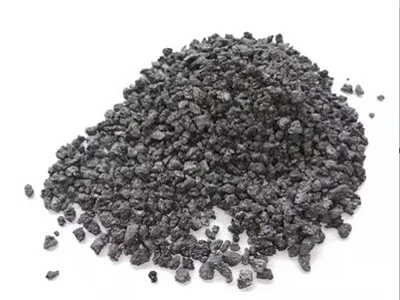
Low Phosphorus Inoculant Ferro Silicon
In industrial production, its role is not limited to chemical modification. It is mainly selected when foundries experience inconsistent microstructure formation across heats, especially in thin-wall castings or high cooling-rate production lines.
Product Overview
Low Phosphorus Inoculant Ferro Silicon is used in grey iron and ductile iron foundries to stabilize graphite nucleation during solidification.
In industrial production, its role is not limited to chemical modification. It is mainly selected when foundries experience inconsistent microstructure formation across heats, especially in thin-wall castings or high cooling-rate production lines.
Compared with standard ferrosilicon inoculants, this grade is produced with tighter control of phosphorus and associated impurity elements, helping reduce variability during the early solidification stage.
It is widely used in both manual ladle treatment and automated pouring systems.
Low Phosphorus Control Matters in Cast Iron Production
In casting practice, phosphorus is not consumed during inoculation. Instead, it tends to concentrate in the last stages of solidification.
When local concentration becomes high, it may form hard intermetallic regions along grain boundaries. These regions do not affect furnace analysis significantly, but they often appear during machining or mechanical testing.
In production environments, this typically leads to:
• Localized hard spots in machined surfaces
• Variation in tool wear between identical parts
• Reduced toughness in heavy-section ductile iron castings
• Increased sensitivity to micro-porosity in slow-cooling zones
These issues are more pronounced in modern high-efficiency foundries where base iron chemistry is already tightly controlled and process windows are narrower.
For this reason, low phosphorus inoculant grades are often selected to improve stability rather than to change composition.
Technical Composition
|
Element |
Standard Low-P Grade |
Controlled Impurity Grade |
Ultra-Low P Grade |
|
Si |
72–78% |
74–78% |
75–80% |
|
P |
≤0.030% |
≤0.020% |
≤0.015% |
|
C |
≤0.10% |
≤0.05% |
≤0.02% |
|
Al |
0.8–1.5% |
≤0.5% |
0.5–1.2% |
|
Ca |
0.5–1.0% |
0.3–0.8% |
0.6–1.2% |
All batches are produced under controlled furnace conditions and verified through spectrometric analysis before shipment.
Behavior During Casting Process
During inoculation, this material acts primarily in the nucleation stage of molten iron solidification.
Its performance depends on:
• Addition timing (ladle vs stream vs wire feeding)
• Holding time before pouring
• Cooling rate of the casting section
In long transfer or automated pouring systems, inoculation fade can become a key source of variability. Low phosphorus grades are often preferred in these systems because they provide more stable response behavior during delayed solidification windows.
Application Industries
This material is commonly used in foundries producing components where dimensional stability and mechanical consistency are important:
• Automotive: Engine blocks, brake discs, steering knuckles
• Wind power: Rotor hubs, gearbox housings
• Industrial systems: Pump bodies, valve casings
• Machinery: Machine tool beds and heavy structural castings
These applications typically require consistent hardness distribution and controlled microstructure across large production volumes.
Quality Control & Traceability
To support industrial buyers and OEM qualification requirements, production is managed with full traceability:
• Furnace-level batch tracking system
• ICP-OES / spectrometric analysis for each heat
• Controlled monitoring of P, Al, Ca, and trace elements
• COA (Certificate of Analysis) issued per shipment
• Packaging barcode system linked to production records
This system is designed to ensure repeatable performance across multiple shipments rather than single-batch compliance.
Certificate


Packaging & Supply Capability
25kg moisture-resistant laminated bags
1MT / 1.25MT jumbo bags for bulk supply
Optional sealed packaging for long-distance maritime transport
Export-ready palletized loading for industrial logistics systems
FAQ
Q: What problem does low phosphorus inoculant actually solve?
A: It helps reduce variability caused by phosphorus segregation during solidification, which can lead to localized hard phases and inconsistent machining behavior.
Q: Does it improve mechanical properties directly?
A: It does not directly change base iron chemistry, but it helps stabilize microstructure formation, which indirectly supports more consistent mechanical performance.
Q: Is it suitable for ductile iron production?
A: Yes. It is commonly used in ductile iron where consistent nodule formation and stable hardness distribution are required.
Q: How is it different from standard FeSi inoculant?
A: The main difference is tighter control of phosphorus and impurity elements, which reduces variability during solidification rather than increasing inoculation strength.
Q: Can it prevent all casting defects?
A: No inoculant can eliminate defects alone. It is used to reduce risks related to nucleation instability within a controlled casting process.
Q: Is it suitable for automated pouring systems?
A: Yes. Fine grades are designed for stable flow behavior in automated dosing and in-stream inoculation systems.
Hot Tags: low phosphorus inoculant ferro silicon, China low phosphorus inoculant ferro silicon manufacturers, suppliers, factory, Ferro Silicon Briquette for Alloy Production, Ferro Silicon for Steelmaking, high carbon silico manganese, Inoculant Ferro Silicon 50 100mm, Refined High Carbon Ferro Silicon, Screened Ferro Silicon
Previous
No InformationYou Might Also Like



Send Inquiry