


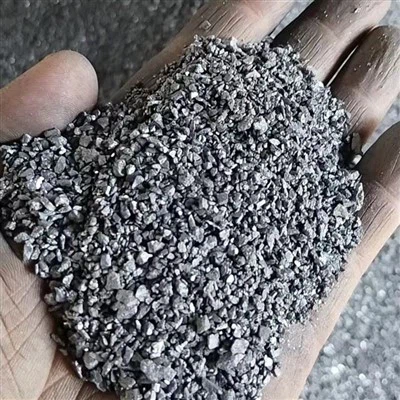
Industrial Silicon Metal Granules 99%
In industrial applications, performance issues are often caused not by nominal purity differences, but by batch-to-batch variation in chemical behavior during furnace operation. Our production approach focuses on maintaining consistent material behavior across large-volume supply contracts, supporting stable furnace recovery and reducing downstream process fluctuation.
Precision Metallurgical Feedstock for Aluminum Alloying & Chemical Applications
High-Purity Industrial Silicon Metal Granules (≥99% Si) are used in pyrometallurgical operations, aluminum alloy production, and chemical reduction processes.
In industrial applications, performance issues are often caused not by nominal purity differences, but by batch-to-batch variation in chemical behavior during furnace operation. Our production approach focuses on maintaining consistent material behavior across large-volume supply contracts, supporting stable furnace recovery and reducing downstream process fluctuation.
Typical Specification
|
Element |
Grade 441 |
Grade 411 |
Industrial Function |
|
Silicon (Si) |
≥ 99.00% |
≥ 99.00% |
Primary reactive element, supports stable silicon recovery (≥95%) |
|
Iron (Fe) |
≤ 0.40% |
≤ 0.40% |
Controlled to reduce intermetallic formation in aluminum alloys |
|
Aluminum (Al) |
≤ 0.40% |
≤ 0.10% |
Helps maintain alloy solidification stability |
|
Calcium (Ca) |
≤ 0.10% |
≤ 0.10% |
Limits slag formation and furnace lining wear |
Quality Note:
Trace elements such as Ti, P, and B can be controlled upon request depending on end-use requirements. All shipments are tested via ICP-OES and XRF according to ASTM/ISO-aligned methods.
Particle Size Distribution (PSD) for Industrial Systems
Particle size influences furnace charging behavior and material flow stability in automated systems.
Standard size ranges
• 1–3 mm: Suitable for fast melting and high-reactivity processes
• 3–10 mm: Standard grade for pneumatic feeding and continuous dosing systems
• 10–50 mm: Used in submerged arc furnace charging and aluminum melting operations
Fine particle control
A secondary screening and air-classification process is applied to reduce fines (<0.5 mm).
This helps reduce:
• Material loss during furnace charging
• Feeding instability in pneumatic systems
• Oxidation during storage and handling.
Application-Oriented Industrial Use
Aluminum Alloy Production (Automotive & Industrial Casting)
Used in aluminum alloy systems such as A356 and A380. Controlled calcium levels help reduce casting defects and minimize hard inclusions that can affect machining performance.
Metallurgical Reduction Processes
Used as a reducing agent in ferroalloy production and high-temperature metallurgical reactions where stable chemical behavior is required.
Chemical Feedstock Applications
Used in intermediate chemical processes where consistent silicon reactivity affects downstream yield and purification cost.
4.98.5% vs. 99.0%
In automated production environments, process instability is rarely caused by silicon content itself. It is usually driven by variation in trace elements within the remaining 1.0%–1.5% impurity range.
Structural Embrittlement in Aluminum Alloys
• Risk in 98.5%:
Higher iron levels (Fe ≤ 0.50%) can promote the formation of coarse intermetallic phases such as β-Al₅FeSi within aluminum alloys. This may reduce ductility and impact fatigue performance in structural castings like A356 components.
• Stability improvement with 99% material:
Lower iron control (Fe ≤ 0.40%) helps reduce the formation of coarse intermetallic structures and supports more uniform solidification behavior in aluminum alloys.
Silicon Recovery Variability (Si Yield)
• Risk in 98.5%:
Variation in surface oxidation and particle strength can lead to inconsistent furnace recovery rates, typically fluctuating in the 88%–93% range. This increases the need for manual adjustment during melting operations.
• With 99% material:
More consistent particle structure and thermal behavior support more stable silicon recovery, generally ≥95%, reducing adjustment frequency during furnace operation.
Refractory Wear and Slag Stability
• Risk in 98.5%:
Higher calcium content (Ca ≤ 0.30%) can increase slag reactivity and contribute to refractory lining wear over time, depending on furnace conditions.
• With 99% material:
Lower calcium levels (Ca ≤ 0.10%) result in more stable slag formation and reduced interaction with furnace lining materials, helping extend maintenance intervals.
Flow Instability in Pneumatic Feeding Systems
• Risk in 98.5%:
Inconsistent crushing behavior can generate excessive fines during handling, which may affect flowability in automated screw or pneumatic feeding systems.
• With 99% material:
Controlled crushing and secondary air classification help reduce fine particle generation and improve material flow consistency in automated dosing systems.
Production Process & Batch Traceability
Production follows a controlled process flow
Quartz sourcing → Submerged arc furnace smelting → Ladle refining → Crushing → Screening → Laboratory testing → Packaging
Key process controls
• conControlled Furnace Operation Parameters
• Separation Of Furnace Batches (no Blending Of Different Lots)
• Standardized Raw Material Input Control
• Final Inspection Before Release
Traceability system
Each jumbo bag is marked with a unique batch code linked to:
• Furnace Tap Record
• Raw Material Source Batch
• Laboratorlaboratory Test Resultsl Laboratorlaboratory Test Results
• Particle Size Distribution Data
Retained samples are stored for future verification if required.
Third-party inspection (SGS / BV / TÜV) is available upon request before shipment.
Packaging & Shipping Conditions
Designed for long-distance sea freight and industrial storage environments:
1,000 kg / 1,250 kg jumbo bags
Inner PE liner for moisture protection
UV-resistant woven polypropylene outer layer
ISPM-15 certified wooden pallets
Shrink-wrapped and steel/PET strapped for container stability
FAQ
Q: Which international grades does your 99% silicon correspond to?
A: Our material generally corresponds to Grade 441 and related industrial classifications such as 421 and 411, depending on Fe, Al, and Ca limits. Custom specifications can be produced based on application requirements.
Q: How do you control calcium-related casting defects?
A: Calcium is controlled through ladle refining using oxygen/argon treatment, which helps separate Ca into slag phases before final solidification. This keeps calcium levels consistently below specified limits.
Q: How is fines content controlled in 3–10 mm material?
A: Secondary vibrating screening and air classification are used to remove fine particles. Fines content is controlled at packaging stage to reduce feeding issues in pneumatic systems.
Q: Can your system support automotive industry traceability requirements?
A: Yes. Each batch is fully traceable via serialized barcode linking furnace logs, raw material input, and laboratory test data, supporting ISO 9001-based audit requirements.
Q: What happens if there is a quality dispute after delivery?
A: Each batch has retained samples stored for verification. In case of discrepancy, we compare with retained samples and can support third-party inspection through SGS or BV for joint analysis.
Commercial RFQ Checklist
To prepare a technical and commercial quotation, please provide:
• Required chemical grade (553 / 441 / 3303 or custom specification)
• Particle size range (e.g., 1–3 mm, 3–10 mm)
• Application type (aluminum alloying, steel deoxidation, chemical use)
• Estimated volume (trial + annual consumption)
• Preferred Incoterms and destination port
Hot Tags: industrial silicon metal granules 99%, China industrial silicon metal granules 99% manufacturers, suppliers, factory, High Density Metallurgical Silicon Metal, Industrial Raw Silicon Granules, metal silicon powder, Silicon Metal for Semiconductor Use, silicon metal per ton, silicon metal powder
You Might Also Like




Send Inquiry