


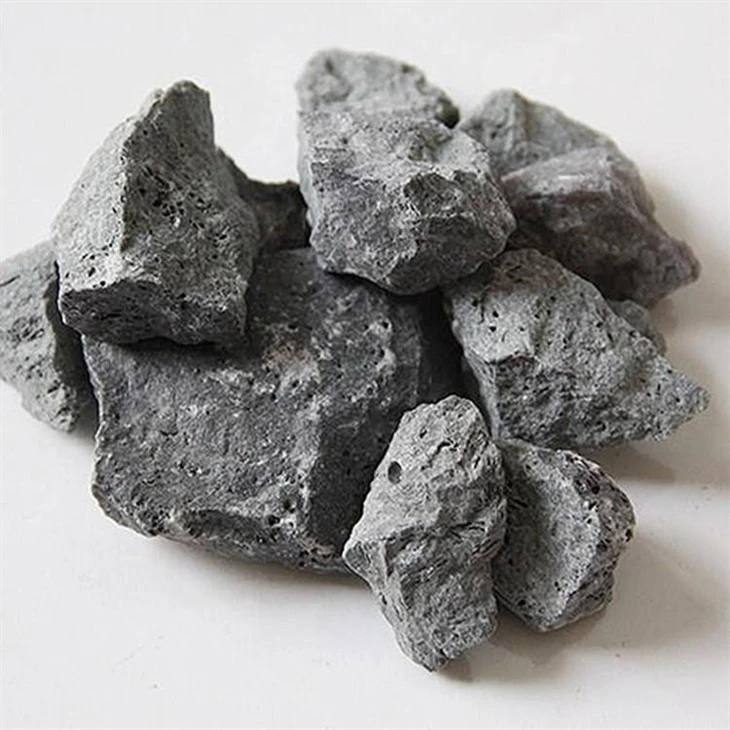
High Carbon Ferro Silicon 72
Overview
High Carbon Silicon 72 (Silicon Carbon Alloy) for Steelmaking & Foundry Applications
High Carbon Silicon 72 (also known as Silicon Carbon Alloy) is a silicon-based alloy containing a minimum of 72% silicon and 15–18% carbon. Developed for carbon steel production and iron foundries, it serves as both a deoxidizer and a source of silicon and carbon during steelmaking.
For steel producers and alloy procurement managers, the primary challenge is balancing stable deoxidization performance with fluctuating alloy costs. In applications where ultra-low carbon chemistry is not required, High Carbon Silicon 72 provides a practical alternative to conventional Ferrosilicon (FeSi 75/72), helping reduce overall alloy costs while maintaining stable deoxidization performance under suitable operating conditions.
Chemical & Physical Properties
|
Element / Specification |
Guaranteed Analysis |
Test Method / Equipment |
|
Silicon (Si) |
≥72.0% |
XRF Spectroscopy / Wet Chemistry |
|
Carbon (C) |
15.0–18.0% |
Infrared Carbon-Sulfur Analyzer |
|
Aluminum (Al) |
≤1.5% |
ICP-OES |
|
Phosphorus (P) |
≤0.04% |
Photometric Method |
|
Sulfur (S) |
≤0.04% |
Infrared Absorption |
Available Particle Sizes:
• 0–3 mm / 1–5 mm: Commonly used for ladle injection and slag conditioning.
• 10–50 mm / 10–100 mm: Commonly used for Electric Arc Furnace (EAF) and Basic Oxygen Furnace (BOF) charging, helping reduce material loss during alloy addition.
• Custom particle sizes and screening tolerances (for example, maximum 5% undersize) are available upon request.
Metallurgical Benefits
Lower Alloy Cost in Suitable Steelmaking Applications
By using High Carbon Silicon 72, steel mills can reduce their reliance on conventional FeSi 75 and supplementary recarburizers in suitable carbon steel applications. Depending on the steel grade, furnace practice and alloy addition strategy, many producers use this material to optimize overall alloy consumption while maintaining the required metallurgical performance.
Stable Silicon Recovery
The naturally smelted silicon-carbon crystalline structure promotes rapid dissolution after addition to molten steel, helping achieve consistent silicon recovery under properly controlled steelmaking conditions. Stable product composition and particle size also help reduce process variation and the need for frequent alloying adjustments during refining.
Improved Steel Cleanliness and Deoxidization
The combined presence of silicon and carbon contributes to the deoxidization reaction during steelmaking. The reaction forms silicon oxide (SiO₂) and carbon monoxide (CO), which can assist inclusion flotation under appropriate refining conditions and support the removal of non-metallic inclusions from molten steel.
Applications
High Carbon Ferro Silicon 72 is suitable for a wide range of metallurgical applications.
Steelmaking: Used as a deoxidizer and alloying additive in carbon steel production, electric arc furnaces, converters, and ladle refining.
Foundry Industry: Applied during cast iron and steel casting production to adjust silicon content and improve metallurgical reactions.
Ferroalloy Manufacturing: Used as a silicon source in the production of various silicon-containing alloys.
Metallurgical Processing: Suitable for processes requiring efficient silicon addition while optimizing production costs.
Recommended Addition Practice
Furnace Tapping
Begin tapping the converter or Electric Arc Furnace (EAF). Before alloy addition, ensure the ladle is clean and excessive slag has been removed to help maintain stable refining conditions.
Alloy Addition Sequence
High Carbon Silicon 72 is commonly added when approximately one-quarter to one-third of the molten steel has entered the ladle. This addition practice helps improve alloy dissolution and promotes early-stage deoxidization before other alloying materials are introduced.
Homogenization & LF Refining
Transfer the molten steel to the Ladle Furnace (LF) for composition adjustment. Argon stirring may be used to promote inclusion flotation and improve bath homogenization. Final chemical composition is verified using Optical Emission Spectrometry (OES) before casting.
Quality Assurance & Supply Chain Reliability
To support consistent product quality and meet international procurement requirements, every batch of our High Carbon Silicon 72 follows a multi-stage quality control process.
Raw Material Inspection
Silica and carbon raw materials are inspected before production to help control impurities such as excessive moisture and sulfur.
In-Process Monitoring
Key production parameters, including furnace temperature and slag condition, are monitored throughout the smelting process to support stable reduction conditions and consistent product quality.
Pre-Shipment Testing
Each production batch is sampled in accordance with applicable inspection procedures. A Mill Test Certificate (MTC) including chemical composition and particle size analysis is supplied with every shipment.
Batch Traceability
Each shipment is assigned a unique batch number, allowing product records and quality documents to be traced throughout the production and delivery process.
Third-Party Inspection
Independent inspection by SGS, BV or Intertek can be arranged before shipment upon customer request.
Certificate


Packaging & Global Logistics
Standard Packaging: 1.0 MT or 1.25 MT waterproof PP jumbo bags with heavy-duty lifting loops.
Sub-Packaging: 25 kg small bags pre-packed inside jumbo bags for easier handling in workshops and manual charging operations.
Lead Time: Containerized shipments are typically arranged within 10–15 days after order confirmation. Bulk vessel shipments depend on production schedule and booking arrangements.
FAQ
Q: Can High Carbon Ferro Silicon replace conventional Ferrosilicon 72?
A: Yes. In many carbon steel and foundry applications where low carbon content is not required, High Carbon Ferro Silicon can be used as an economical substitute for conventional FeSi 72.
Q: What industries commonly use this product?
A: It is widely used in steelmaking, foundries, ferroalloy production, and other metallurgical processes requiring silicon addition and deoxidization.
Q: Can you provide customized particle sizes?
A: Yes. We can produce customized sizing according to customer requirements and production equipment.
Q: Is every shipment tested before delivery?
A: Yes. Every production batch undergoes chemical composition testing before shipment. Test reports are provided with the goods.
Q: What packaging options are available?
A: Standard packaging includes 1 MT jumbo bags and 25 kg bags. Customized packaging is available upon request.
Q: What is your minimum order quantity?
A: MOQ depends on the destination market and packaging requirements. Please contact us with your purchasing plan for a quotation.
Q: Can third-party inspection be arranged?
A: Yes. Independent inspections by organizations such as SGS or BV can be arranged before shipment if required.
Hot Tags: high carbon ferro silicon 72, China high carbon ferro silicon 72 manufacturers, suppliers, factory, Ferro Silicon Lump 10 50mm, ferrosilicon use, high carbon ferro silicon, Low Phosphorus Low Carbon Ferro Silicon, silicon magnesium alloy, Ultra Low Carbon Ferro Silicon
You Might Also Like


Send Inquiry