


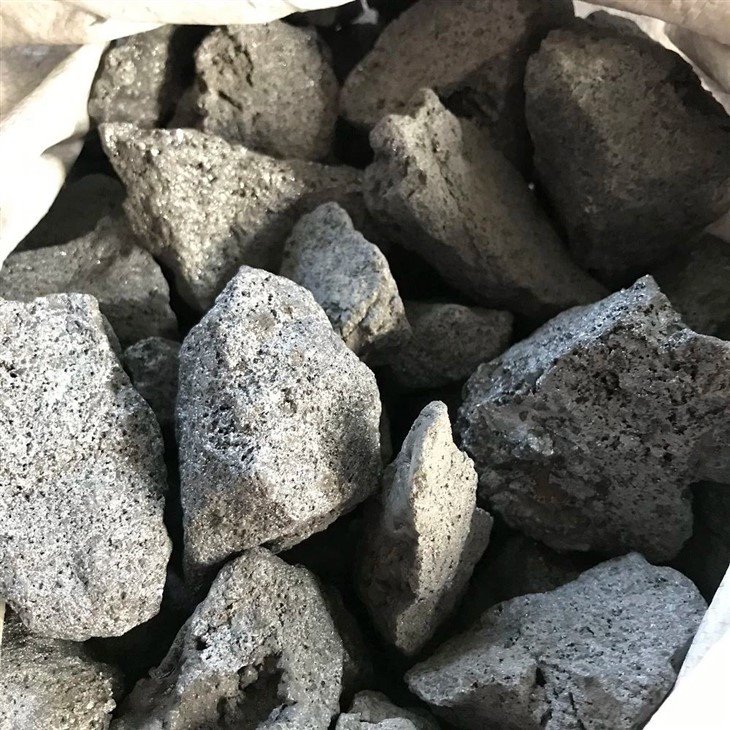
High Carbon Ferro Silicon 65
It typically contains 63%–68% silicon, with controlled levels of carbon and trace elements such as aluminum, calcium, phosphorus, and sulfur.
Product Overview
Ferrosilicon 65 (FeSi65) is a silicon-iron alloy widely used in steelmaking and iron casting processes as a deoxidizer and silicon carrier.
It typically contains 63%–68% silicon, with controlled levels of carbon and trace elements such as aluminum, calcium, phosphorus, and sulfur.
In industrial production, FeSi65 is selected when steel plants require a balance between:
• Stable deoxidation behavior
• Reliable silicon recovery
• Controlled production cost per ton of steel
It is commonly used in Electric Arc Furnace (EAF), Basic Oxygen Furnace (BOF), and ladle refining operations.
Why Steel Plants Use FeSi65 in Real Production
Stable Oxygen Control During Tapping
During steel tapping, oxygen control is critical to prevent:
• Gas porosity in billets
• Non-metallic inclusions
• Surface defects after casting
FeSi65 provides fast silicon-oxygen reaction, forming stable slag compounds that are removed during refining.
Stable Oxygen Control During Tapping
During steel tapping, oxygen control is critical to prevent:
• Gas porosity in billets
• Non-metallic inclusions
• Surface defects after casting
FeSi65 provides fast silicon-oxygen reaction, forming stable slag compounds that are removed during refining.
Controlled Carbon and Impurity Input
With carbon typically below 0.2%, FeSi65 allows steelmakers to introduce silicon without significantly affecting final carbon levels.
This is important for:
• Structural steel grades
• Low To Medium Carbon Steels
• Ductile iron production
It reduces the need for downstream carbon correction in ladle refining.
Cost Efficiency in Large-Scale Steel Production
In many steel mills, FeSi65 is selected as a cost-performance grade between standard silicon additives and high-purity ferrosilicon (FeSi75).
It helps reduce alloy cost per heat while maintaining acceptable:
• Mechanical properties of steel
• Chemical consistency
• Production stability
The actual cost benefit varies depending on plant efficiency and raw material strategy.
Chemical Composition
|
Element |
Content Range |
|
Silicon (Si) |
63% – 68% |
|
Iron (Fe) |
28% – 33% |
|
Carbon (C) |
≤ 0.2% |
|
Aluminum (Al) |
1.0% – 1.5% |
|
Calcium (Ca) |
0.4% – 0.7% |
|
Phosphorus (P) |
≤ 0.04% |
|
Sulfur (S) |
≤ 0.02% |
Composition can be adjusted based on steel grade requirements and refining process conditions.
Industrial Applications
Steelmaking Industry
FeSi65 is mainly used in:
Deoxidation during tapping and ladle refining
Silicon alloy adjustment in molten steel
Improving steel density and internal soundness
It is widely applied in:
Rebar and construction steel
Carbon steel
Low alloy structural steel
Cast Iron and Foundry Applications
In cast iron production, FeSi65 plays two key roles:
Graphite formation control
It helps reduce carbide formation and supports stable graphite structure in grey and ductile iron.
Casting performance improvement
It improves molten iron fluidity, which helps reduce shrinkage defects and casting rejection rates in complex molds.
Particle Size and Packaging
Different production systems require different feeding methods.
Available sizes:
• Lumps: 10–50 mm / 10–100 mm
• Granules: 1–3 mm / 3–8 mm
• Custom sizing available upon request
Fines content is controlled through batch sieving to ensure stable furnace feeding performance.
Packaging:
• 1MT / 1.25MT jumbo bags
• Optional moisture-resistant inner liners for ocean shipment
These packaging systems are designed to reduce moisture absorption and handling loss during long-distance transport.
Quality Control & Supply Consistency
Each batch of FeSi65 is produced under controlled metallurgical conditions and tested before shipment.
Quality control includes:
Chemical composition testing per batch
Particle size distribution verification
COA (Certificate of Analysis) provided with every shipment
Third-party inspection available upon request (SGS / BV / Intertek)
Production batches are tracked to maintain consistency between deliveries, especially for long-term supply contracts.
Certificate


FAQ
Q: What is the main difference between FeSi65 and FeSi75?
A: FeSi75 has higher silicon content and is used for higher-purity or higher-efficiency requirements.
FeSi65 is more cost-effective and is widely used in large-scale steel production where stable deoxidation is the main requirement.
Q: Can FeSi65 be used in EAF and BOF steelmaking?
A: Yes. FeSi65 is commonly used in both EAF and BOF processes, mainly during tapping or ladle refining to control oxygen and adjust silicon content.
Q: What particle size is best for steelmaking?
A: Lumps: For direct furnace charging
Granules: For faster ladle refining reaction
Fines: Usually avoided due to material loss risk
Q: What quality documents are provided?
A: Each shipment can include COA, batch chemical report, and optional third-party inspection reports (SGS / BV / Intertek).
Q: What affects silicon recovery rate?
A: Recovery depends on furnace temperature, slag condition, and alloy addition timing. It varies by production setup, not a fixed value.
Q: How is FeSi65 packed for export?
A: Standard packaging is 1MT jumbo bags with moisture-proof liners to ensure stability during long-distance shipping.
Hot Tags: high carbon ferro silicon 65, China high carbon ferro silicon 65 manufacturers, suppliers, factory, ferro silicon industry, ferrosilicon per ton, fesi ferrosilicon, High Carbon Ferro Silicon Powder, Inoculant Ferro Silicon for Gray Iron, Low Sulfur Ferro Silicon Lump
Previous
High Carbon Ferro Silicon 70Next
No InformationYou Might Also Like


Send Inquiry