


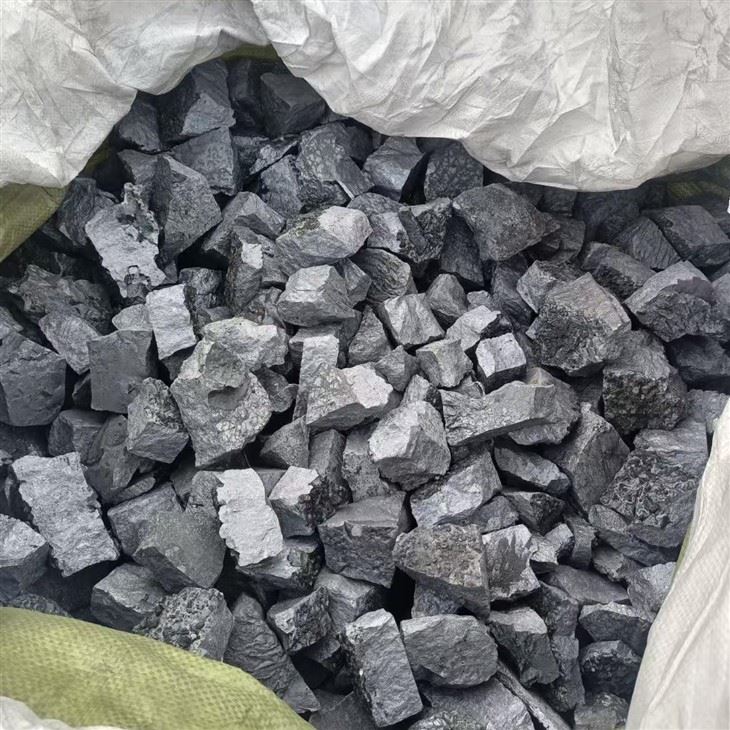
High Carbon Ferro Silicon 75
Overview
Ferrosilicon 75 (FeSi 75) – Premium Deoxidizer and Silicon Alloy for Global Steelmaking & Foundries
Ferrosilicon 75 (FeSi 75) is a silicon-iron alloy typically containing around 75% silicon and 23–24% iron, with controlled levels of trace elements depending on production grade. It is widely used in steelmaking and foundry operations as a deoxidizing agent and silicon source for carbon steel, structural steel, and cast iron production.
For international procurement teams and melt shop operators, FeSi 75 is evaluated not only by chemical composition, but also by its consistency in silicon yield, its influence on slag behavior, and its contribution to overall alloy consumption efficiency per ton of liquid steel. Our FeSi 75 is produced in submerged arc furnaces under controlled smelting conditions to help maintain stable performance during tapping and ladle refining processes.
Chemical Specification
|
Element / Specification |
Regular Grade |
Low-Al Grade |
Testing Method |
|
Silicon (Si) |
74.0% – 78.0% |
75.0% – 78.0% |
XRF Spectroscopy |
|
Carbon (C) |
≤0.20% |
≤0.10% |
Infrared Carbon-Sulfur Analyzer |
|
Aluminum (Al) |
≤1.50% |
≤0.50% / ≤0.10% |
ICP-OES / Wet Chemical |
|
Phosphorus (P) |
≤0.04% |
≤0.03% |
Photometric Method |
|
Sulfur (S) |
≤0.02% |
≤0.02% |
Infrared Absorption |
Particle Size Control
To support stable dissolution behavior in different furnace operations, particle size is controlled through screening and crushing processes:
10–50 mm / 10–100 mm (EAF / Ladle Charging):
Commonly used for bulk addition during tapping and primary furnace charging. Screening is typically controlled to reduce excessive fines at shipment stage.
0–3 mm / 1–5 mm (Injection / LF Adjustment):
Used for ladle furnace (LF) trimming and fast dissolution applications where rapid silicon adjustment is required.
Functional Role in Metallurgical
Deoxidation Behavior in Steelmaking
FeSi 75 is commonly used during tapping and secondary refining to reduce dissolved oxygen in molten steel. Silicon reacts with oxygen to form stable SiO₂, which is then transferred into slag under appropriate refining conditions.
The efficiency of deoxidation is generally influenced by furnace temperature, slag composition, and addition timing rather than material composition alone.
Silicon Yield Stability
In industrial steel production, silicon yield is typically evaluated at the process level rather than as a fixed material property.
Under stable operating conditions, FeSi 75 is generally selected for applications requiring consistent silicon input and predictable refining behavior. However, actual recovery may vary depending on furnace type and steel grade requirements.
Inclusion and Casting Behavior
Aluminum and other trace elements in FeSi 75 can affect the formation of non-metallic inclusions in steel.
In continuous casting operations, lower aluminum grades are often preferred to help reduce operational risks such as nozzle clogging and improve casting stability.
Applications
High Carbon Ferro Silicon 75 is used in the following metallurgical processes:
Steelmaking
Deoxidizer in Electric Arc Furnace (EAF)
Alloy addition in Basic Oxygen Furnace (BOF)
Ladle furnace (LF) refining stage silicon adjustment
Foundry Industry
Cast iron production for controlling silicon content
Improvement of graphite formation and casting structure stability
Ferroalloy Processing
Silicon source in secondary alloy production
Intermediate material in silicon-based alloy systems
Quality Control & Traceability
As an ISO 9001:2015 certified manufacturer, we implement a full-lifecycle quality control system designed to support consistent material performance in industrial steelmaking and foundry applications.
Batch-Level Traceability
Each production heat is assigned a unique batch number that allows traceability from raw material selection (such as quartz and carbon sources) through smelting, processing, and final packaging.
In-House Laboratory Verification
Our internal quality control laboratory conducts chemical analysis and particle size testing for each shipment. A Mill Test Certificate (MTC) is issued based on laboratory results, including chemical composition and sieve distribution data.
International Inspection Compliance
Third-party inspections by organizations such as SGS, Bureau Veritas (BV), or Intertek can be arranged at the port of loading upon customer request.
Certificate


Packaging & International Logistics
Standard Big Bags: 1.0 MT or 1.25 MT moisture-resistant polypropylene jumbo bags with reinforced lifting loops suitable for container handling.
Custom Workshop Packaging: 25 kg multi-layer bags placed inside 1.0 MT jumbo bags, suitable for both manual and semi-automated batching systems.
Delivery Lead Time: For standard specifications and regular production schedules, container shipments are typically arranged within 7–12 days after contract confirmation. Bulk vessel shipments depend on production planning and laycan schedules.
FAQ
Q: Why choose FeSi 75 instead of lower-grade FeSi 72?
A: FeSi 75 is generally selected in applications where higher silicon consistency and controlled impurity levels are required. Compared with lower silicon grades, it may provide more stable silicon input per unit mass under standard furnace conditions. However, actual selection depends on steel grade requirements, furnace practice, and cost considerations.
Q: How do you reduce fines generation during maritime transport?
A: Material degradation is typically influenced by handling method, drop height during loading, and vibration during transit. To help reduce fines generation, reinforced packaging and controlled loading procedures are commonly applied. Packaging configurations can also be adjusted based on shipping routes and container conditions.
Q: What is your production capacity for bulk orders?
A: Our production is based on continuous submerged arc furnace operations. For large-volume orders such as 500 tons, production and shipment schedules are typically arranged according to current furnace allocation and export planning, with coordination between production and logistics teams.
Q: Does particle size affect silicon recovery in steelmaking?
A: Yes. Particle size can influence dissolution speed and oxidation losses during addition. Smaller particles generally dissolve faster but may increase oxidation loss if not properly controlled. Larger sizes are often used for bulk charging in EAF or BOF operations to maintain more stable reaction behavior. Most steel plants select particle size based on furnace type and addition method.
Q: Can FeSi 75 be used in continuous casting processes?
A: Yes, FeSi 75 is commonly used in ladle refining stages before continuous casting. However, impurity control-especially aluminum and calcium levels-becomes more critical in continuous casting operations, as these elements may affect nozzle performance and inclusion behavior.
Hot Tags: high carbon ferro silicon 75, China high carbon ferro silicon 75 manufacturers, suppliers, factory, ferro silicon chemical, Ferro Silicon Powder 600 Mesh, Ferro Silicon Powder for Foundry, ferrous silicon, Inoculant Ferro Silicon for Gray Iron, Refined Standard Ferro Silicon
You Might Also Like




Send Inquiry