


Industrial Silicon Metal Granules 98.5%
In high-volume production environments, small variations in temperature or chemistry may lead to furnace instability, alloy property deviation, or catalyst contamination.
High-Stability Metallurgical Feedstock & Industrial-Grade Reducing Agent
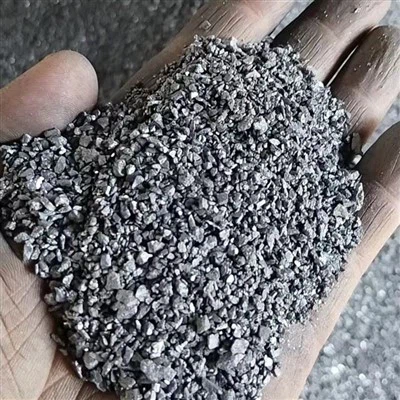
Industrial Silicon Metal Granules (98.5% base purity) are designed for metallurgical applications, continuous-feed aluminum alloy smelting, and industrial chemical reduction processes.
In high-volume production environments, small variations in temperature or chemistry may lead to furnace instability, alloy property deviation, or catalyst contamination.
Our production system focuses on process consistency across batches, ensuring the material performs in a predictable way under industrial furnace or reactor conditions.
Specification Matrix
|
Element |
Specification (Wt%) |
Industrial Function |
|
Silicon (Si) |
≥ 98.50% |
Main reactive element for alloying and reduction |
|
Iron (Fe) |
≤ 0.50% |
Controlled to reduce intermetallic formation in aluminum |
|
Aluminum (Al) |
≤ 0.50% |
Maintains stability during solidification process |
|
Calcium (Ca) |
≤ 0.30% (or customized) |
Reduces slag instability and refractory wear |
Quality Control Note:
Each production lot is sampled during tapping and casting stages. Shipment is supplied with a furnace-lot COA based on ICP-OES testing, aligned with industrial standard methods (ASTM / ISO where applicable).
Particle Size Distribution (PSD) for Industrial Handling
Particle size affects furnace charging behavior and feeding system stability.
Standard size ranges
• 1–3 mm: Fast reaction and fine processing applications
• 3–10 mm: Suitable for pneumatic conveying and continuous feeding systems
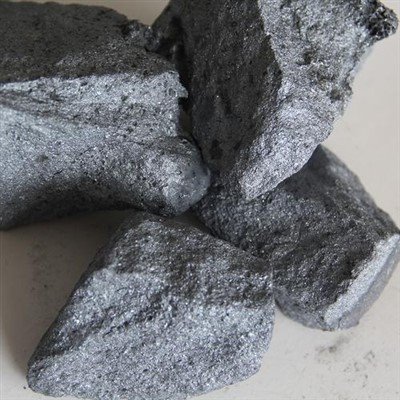
• 10–50 mm: Used in submerged arc furnace charging and alloy melting
Dust / fines control
Post-crushing air classification is used to reduce excessive fine particles.
This helps to reduce:
• Material loss during charging
• Clogging in screw or pneumatic feeders
• Oxidation during storage and transport
Fines content is controlled within defined limits at packaging stage.
Application-Oriented Performance
Aluminum Alloy Production
Used in aluminum casting and alloy production (3xx.x / 4xx.x series). Stable calcium and iron levels help reduce defects and machining wear issues caused by hard inclusions.
Industrial Reduction Processes
Used as a reducing agent in high-temperature metallurgical processes for ferroalloy and specialty metal production.
Intermediate Feedstock Use
Suitable for briquetting or furnace blending where silicon recovery efficiency depends on stable material composition and particle behavior.
ISO 9001 Quality System & Traceability
Production follows a defined process flow:
Quartz sourcing → Electric arc furnace smelting → Refining → Crushing → Sieving → ICP-OES testing
Key controls:
• No cross-lot blending between furnace batches
• Each jumbo bag assigned a unique batch traceability code
• Full linkage to furnace logs and raw material input records
Pre-shipment inspection (PSI) can be arranged with SGS, BV, or TÜV based on contract requirements.
Certificate


Industrial Packaging & Shipping Protection
Designed for marine transport and warehouse storage:
1,000 kg / 1,250 kg jumbo bags
Inner PE liner for moisture protection
UV-resistant woven polypropylene outer layer
ISPM-15 certified wooden pallets
Shrink-wrapping and steel strapping for container stability
FAQ
Q: What standard grade does your 98.5% silicon correspond to?
A: Our material generally aligns with Grade 553 / 551 classifications, depending on Fe, Al, and Ca limits. Specifications can be adjusted based on customer requirements and application.
Q: How do you prevent feeding system blockages?
A: We control fines through secondary air classification after crushing. Fines content is kept within controlled limits at packaging, reducing risks of bridging or clogging in pneumatic and screw systems.
Q: Can a single furnace lot be used for large orders?
A: Yes. Standard furnace batches range from 5–12 tons. For large orders, consecutive batches can be separated and supplied without blending to maintain chemical consistency.
Q: How do you manage raw material variation?
A: Quartz and reductants are sourced from long-term controlled suppliers. Incoming materials are pre-tested for key impurity elements before furnace charging.
Q: Can third-party inspection be arranged?
A: Yes. SGS, BV, or TÜV inspection can be conducted at packing or loading stage. Sampling can follow agreed international standards before shipment release.
Commercial RFQ Checklist
To prepare a technical and commercial quotation, please provide:
• Required chemical grade (553 / 441 / 3303 or custom specification)
• Particle size range (e.g., 1–3 mm, 3–10 mm)
• Application type (aluminum alloying, steel deoxidation, chemical use)
• Estimated volume (trial + annual consumption)
• Preferred Incoterms and destination port
Hot Tags: industrial silicon metal granules 98.5%, China industrial silicon metal granules 98.5% manufacturers, suppliers, factory, Chemical Silicon Metal for Chemical Industry, Crushed Metallurgical Silicon Metal, Export Grade Silicon Metal Powder, Metallurgical Silicon Metal 10 50mm, Silicon Metal Lump 553 Grade, silicon metal usage
You Might Also Like




Send Inquiry