


Metallurgical Grade Silicon Granules
Overview
Silicon Material for Aluminum Alloying, Steel Deoxidation, and Organosilicon Synthesis
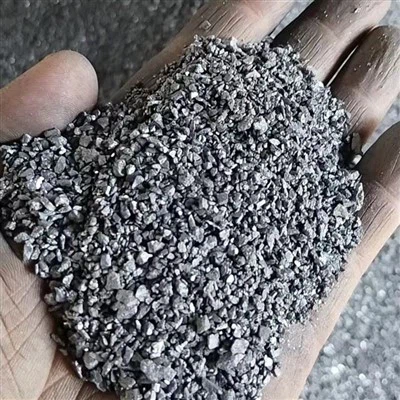
Our Metallurgical Grade Silicon Granules (MG-Si) are produced from selected quartz raw materials and refined in submerged arc furnace processes. The material is then processed into controlled particle sizes for use in automated metal refining systems and foundry charging operations.
Compared with irregular silicon lumps, granulated silicon is designed to improve handling consistency in industrial environments where material flow, dosing accuracy, and furnace charging behavior are important factors. It helps reduce issues such as uneven distribution in furnaces (segregation), material loss during melting, and feeding interruptions in hopper systems.
The product is used in aluminum alloy production, steel deoxidation processes, and organosilicon chemical synthesis, where stable silicon input contributes to more predictable process performance and recovery behavior.
International Standard Grades
|
Standard Grade |
Si Content (Min) |
Fe (Max) |
Al (Max) |
Ca (Max) |
Typical Downstream Application |
|
Grade 2202 |
99.5% |
0.20% |
0.20% |
0.02% |
Organosilicon synthesis, chemical intermediates |
|
Grade 3303 |
99.3% |
0.30% |
0.30% |
0.03% |
Aerospace aluminum-silicon alloys, precision castings |
|
Grade 441 |
99.0% |
0.40% |
0.40% |
0.10% |
Automotive aluminum foundries (engine parts, wheel hubs) |
|
Grade 553 |
98.5% |
0.50% |
0.50% |
0.30% |
Steel deoxidation, ferroalloys, general casting applications |
Note: Elements such as Titanium (Ti), Phosphorus (P), and Carbon (C) can be controlled according to customer-specific process requirements or SOPs.
Sizing Engineering & Fine Powder Control
Particle sizing is controlled through multi-stage screening processes to maintain a defined size distribution and reduce excessive fines in the final product.
Vibratory Dosing Sizes: 1 – 3 mm / 2 – 5 mm
Furnace Charging Sizes: 3 – 10 mm / 5 – 15 mm
Fines Control: Particles below 0.5 mm are typically controlled below 2.0% at packaging stage.
Product Characteristics
Metallurgical Grade Silicon Granules are designed for stable industrial use rather than laboratory-level precision.
Key characteristics include:
• Controlled silicon content suitable for alloying applications
• Stable impurity range for industrial metallurgy processes
• Granular form for easier handling and furnace charging
• Reduced fines to minimize dust during transport and feeding
• Suitable melting behavior under high-temperature furnace conditions
Particle size can be adjusted depending on furnace type, feeding system, and production process requirements.
Solving Common Foundry & Smelter Processing Issues
Thermal Melting Behavior and Slag Interaction
In furnace environments, irregular lump silicon may dissolve unevenly due to size variation and inconsistent surface contact. Granular silicon provides more uniform contact with molten metal, supporting faster and more consistent melting behavior.
This can help reduce localized cooling effects and improve dissolution uniformity during alloying or refining operations.
Moisture Control and Casting Safety
In molten metal processing, moisture content is an important parameter due to its impact on hydrogen generation and casting quality.
Each batch is processed with a drying step prior to packaging. Final moisture content is controlled below 0.1% before sealing to reduce the risk of gas-related casting defects.
Typical Applications
Aluminum Alloy Production
Silicon is a key element in aluminum-silicon alloys, which are widely used in automotive parts, construction materials, and mechanical components.
Steel and Ferroalloy Industry
In steelmaking, silicon is used as a deoxidizing agent. It helps remove oxygen from molten steel, improving:
Steel purity
Structural stability
Mechanical performance
Chemical Industry
Silicon is also used as a raw material in chemical processing, including the production of silicon-based intermediates and industrial compounds.
Industrial Metallurgy and Foundries
Foundries use silicon as an alloying additive to improve casting performance and reduce defects in metal parts.
Supply Chain, Quality Control & Logistics
Quality Management System
Production and processing operations follow ISO 9001:2015 quality management practices to maintain consistency between batches.
Inspection and Documentation
Each shipment is accompanied by a Certificate of Analysis (COA). Third-party inspection services such as SGS or Bureau Veritas (BV) can be arranged upon request at the loading port to verify grade and particle size compliance.
Industrial Packaging
Materials are packed in 1,000 kg or 1,250 kg woven jumbo bags with internal liners. Packaging is designed for bulk handling systems and includes bottom discharge options for direct integration with automated feeding equipment.
Certificate


FAQ
Q: How do I choose between Grade 553, 441, and 3303?
A: Selection depends mainly on the acceptable level of iron (Fe) and calcium (Ca) in the final application.
For automotive aluminum castings requiring better mechanical performance, lower iron grades such as 441 or 3303 are generally used. Higher iron grades such as 553 are more commonly used in steel deoxidation where iron is already part of the system.
Q: How is segregation in jumbo bags controlled?
A: Segregation risk is managed through controlled particle size distribution during screening. A narrow PSD range helps maintain uniform packing density, reducing particle separation during transportation and storage.
Q: Why are granules preferred in automated feeding systems?
A: Granules provide more stable flow behavior compared with irregular lumps, which can cause inconsistent feeding or bridging in hopper systems. This improves dosing accuracy in automated metallurgical processes.
Q: What are typical limits for Ti and P in chemical-grade applications?
A: For chemical applications such as organosilicon production, Titanium (Ti) is typically controlled below 0.04%, and Phosphorus (P) below 0.01%, depending on process sensitivity requirements.
Q: How is moisture controlled during shipping?
A: Packaging includes sealed inner liners to reduce moisture ingress. Desiccants can be placed inside containers upon request to reduce humidity exposure during sea transport.
Q: What is your MOQ and supply capability?
A: Standard international shipment begins from one full container load (FCL, approximately 20–25 metric tons). Long-term supply agreements and scheduled deliveries can be arranged based on annual consumption requirements.
Commercial RFQ Checklist
To prepare a technical and commercial quotation, please provide:
• Required chemical grade (553 / 441 / 3303 or custom specification)
• Particle size range (e.g., 1–3 mm, 3–10 mm)
• Application type (aluminum alloying, steel deoxidation, chemical use)
• Estimated volume (trial + annual consumption)
• Preferred Incoterms and destination port.
Hot Tags: metallurgical grade silicon granules, China metallurgical grade silicon granules manufacturers, suppliers, factory, carbide sheet, Crushed Silicon Metal Lump, High Purity Silicon Metal Powder, Industrial Silicon Metal Powder, Low Impurity High Purity Silicon, Screened Metallurgical Silicon Metal
You Might Also Like


Send Inquiry