


Chemical Grade Silicon Metal Granules
Overview
High-Consistency Feedstock for Advanced Chemical Synthesis & Industrial Applications
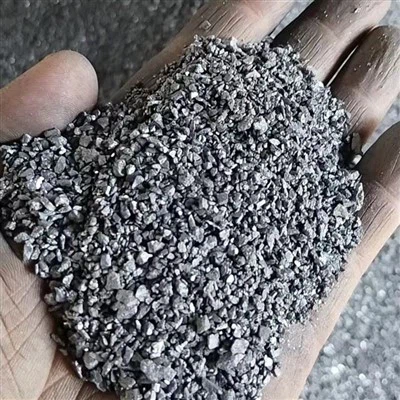
Chemical Grade Silicon Metal Granules are engineered for industrial processes where chemical purity, impurity control, and reaction kinetics directly affect downstream yield. Unlike standard metallurgical-grade silicon used mainly in bulk steelmaking, this material is processed through secondary refining and controlled production steps to meet requirements in organosilicon (silicone) production, silane synthesis, and specialty alloy applications.Our production approach focuses on impurity stability and repeatable thermal-chemical behavior across production cycles.
Typical Elemental Specification Range
|
Element |
Composition Range |
Industrial Function |
|
Si (Silicon) |
98.5% – 99.5% min |
Main reactive matrix for synthesis |
|
Fe (Iron) |
≤ 0.40% or custom |
Controlled to reduce catalyst interference |
|
Al (Aluminum) |
≤ 0.20% or custom |
Limits intermetallic formation |
|
Ca (Calcium) |
≤ 0.05% or custom |
Reduces slagging and instability |
Each shipment is provided with a furnace-lot traceable Certificate of Analysis (COA), supported by ICP-OES and XRF testing, matching customer technical data requirements.
Particle Size Distribution (PSD) for Reactor Efficiency
Granule size directly affects melting rate, feeding stability, and mass transfer behavior in reactors.
Available size grades
• 1–3 mm: High surface-area applications and fast reaction systems
• 3–10 mm: Commonly used in continuous-feed reactors and standard synthesis processes
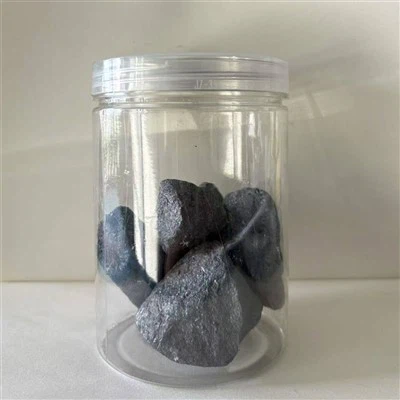
• 10–50 mm: Suitable for alloying, melting, and high-temperature furnace use
• Custom sizing available upon request
Control of Fines Content
Production includes multi-stage crushing and screening to reduce fine particles.
This helps prevent:
• Feeding instability in automated dosing systems
• Oxidation during storage and transport
• Pressure fluctuation in closed reactor systems
Application-Oriented Material Design
Organosilicon & Silane Production
Used in chlorosilane and siloxane synthesis. Controlled impurity levels help reduce side reactions and stabilize downstream purification load.
Aluminum Alloy Production
Used as an alloying element in aluminum systems. Controlled Fe and Ca levels help maintain alloy consistency and reduce casting defects.
Specialty Chemical Reduction & Advanced Materials
Used in high-temperature reduction reactions and in the production of materials such as silicon nitride (Si₃N₄) and silicon carbide (SiC), where stability of composition influences final phase formation.
Quality Assurance & Traceability System
To reduce inconsistencies commonly found in bulk industrial silicon supply, production follows a controlled process flow:
Quartz selection → Submerged arc smelting → Refining → Crushing → Sieving → ICP-OES / PSD testing
Each batch is tracked with a unique ID linked to furnace data and processing records.
• ISO 9001:2015 quality system compliance
• REACH support for EU shipments
• Third-party inspection available (SGS, BV, TÜV) upon request
Certificate


Industrial Packaging & Logistics
Packaging is designed for long-distance transport and industrial handling:
1,000 kg / 1,250 kg jumbo bags
Inner PE liner to reduce moisture exposure
ISPM-15 certified wooden pallets
Reinforced strapping and shrink-wrapping for container transport
FAQ
Q: How do you ensure batch-to-batch consistency?
A: Each furnace batch is separated and not blended. Chemical and physical data are recorded per production cycle. ICP-OES testing is applied to every shipment, and production parameters are locked based on agreed technical specifications.
Q: Can impurity levels be customized?
A: Yes. Fe, Al, and Ca limits can be adjusted according to application requirements. For example, Fe can be controlled to ≤0.20% for sensitive chemical synthesis applications, depending on feasibility.
Q: How do you control fine particle content in 3–10 mm material?
A: We use multi-stage screening and air classification. Fine content is typically controlled below 5% by weight at packaging stage. Inner liners are used to reduce further breakdown during shipping.
Q: Is the product REACH compliant?
A: Yes. Documentation including SDS/MSDS and export compliance files is provided for EU shipments under REACH requirements.
Q: What happens if there is a quality dispute?
A: All shipments are traceable via batch ID. Retained samples are kept for each production lot. If a dispute occurs, we support third-party verification through SGS or BV to confirm material consistency.
Commercial RFQ Checklist
To prepare a technical and commercial quotation, please provide:
• Required chemical grade (553 / 441 / 3303 or custom specification)
• Particle size range (e.g., 1–3 mm, 3–10 mm)
• Application type (aluminum alloying, steel deoxidation, chemical use)
• Estimated volume (trial + annual consumption)
• Preferred Incoterms and destination port
Hot Tags: chemical grade silicon metal granules, China chemical grade silicon metal granules manufacturers, suppliers, factory, Crushed Chemical Silicon Metal, Crushed Silicon Metal Granules, Crushed Silicon Metal Powder, Export Grade High Purity Silicon, High Purity Silicon Metal 99 99 , Silicon Metal Lump 553
You Might Also Like




Send Inquiry