


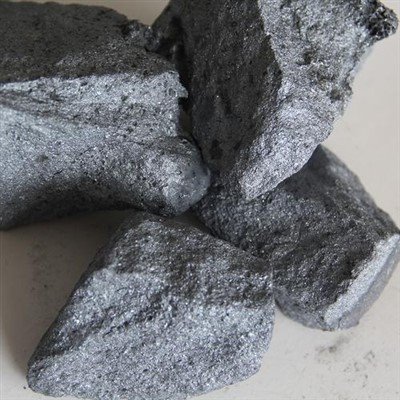
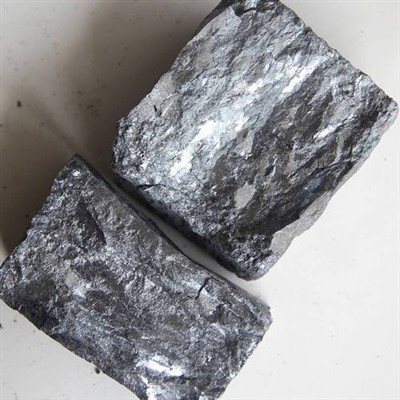
Metallurgical Grade Silicon Lump
Overview
In continuous smelting and chemical synthesis, raw material variation is the primary driver of unexpected downstream costs. For automotive aluminum casters (producing A356 or ADC12) and chemical chemical producers, a sudden spike in Iron ($Fe$), Aluminum ($Al$), or Calcium ($Ca$) can lead to brittle alloy structures, catalyst poisoning, or excessive furnace slagging.
Our Metallurgical Grade Silicon Metal Lumps are manufactured strictly compliant with GB/T 2881 and ASTM industry specifications. By substituting volatile spot-market trading with disciplined, submerged arc furnace (SAF) process control and ladle refining, we ensure that what arrives at your plant perfectly matches your chemical profile-batch after batch.
Standard Grade Classification & Chemical Specifications
|
Industrial Grade |
Si (Min %) |
Fe (Max %) |
Al (Max %) |
Ca (Max %) |
Typical Downstream Applications |
|
Grade 553 |
98.5% |
0.50% |
0.50% |
0.30% |
Secondary aluminum ingots, construction-grade alloys, steel deoxidation |
|
Grade 441 |
99.0% |
0.40% |
0.40% |
0.10% |
Automotive wheel castings (A356), high-ductility aluminum-silicon alloys |
|
Grade 3303 |
99.3% |
0.30% |
0.30% |
0.03% |
Organosilicon intermediates, silane coupling agents, silicone rubber base |
|
Grade 2202 |
99.5% |
0.20% |
0.20% |
0.02% |
Specialized chemical synthesis, advanced metallurgical formulations |
Granularity / Particle Sizing:
Standard distribution is 10–100 mm or 10–50 mm (≥ 90% passing). Custom sizing arrays (e.g., 2–8 mm for specialized feeders) are available upon technical review.
Process-Driven Stability
B2B buyers know that high purity on a single sample is easy; achieving it across 5,000 tons requires deep operational discipline. Our production workflow tackles the root causes of metallurgical variation:
Raw Material Fingerprinting
We use low-ash petroleum coke, high-purity charcoal, and silica quartz with a fixed SiO₂ ≥ 99.5% baseline. This eliminates random trace element entry before the furnace is even powered on.
Ladle Bottom-Blowing & Refining
To hit the strict Calcium (≤ 0.03%) and Aluminum limits required for Grade 3303 and 2202, the liquid silicon undergoes oxygen-chlorine mixed gas bottom-blowing in the ladle to aggressively strip away metallic dross and slag.
Automated Multi-Stage Screening
Mechanical jaw-crushing combined with double-deck vibrating screens minimizes structural micro-fines, maintaining strict control over the sub-10mm dust content (≤ 5% at loading port).
Application-Targeted Performance Metrics
Aluminum Alloy Manufacturing
• The Problem: Unstable silicon recovery rates force continuous furnace adjustments and recalculations.
• Our Solution: Precise Si percentage mapping increases direct recovery efficiency, optimizes melt fluidity, and drastically reduces casting shrinkage defects.
Organosilicon & Silicone Synthesis
• The Problem: Micro-impurities (specifically Ca and Fe) block active catalytic sites in fluid-bed reactors, accelerating catalyst poisoning.
• Our Solution: Deeply refined chemical grades keep Ca levels consistently under 300 PPM, preserving reaction kinetic stability.
Steelmaking & Refractory Formulations
• The Problem: Slag inclusions lower clean steel ratings.
• Our Solution: High-affinity deoxidizing profiles promote rapid silica formation that cleanly separates to the slag layer, enhancing steel cleanliness.
Supply Chain Risk Mitigation & Quality Gateways
Continuous metallurgical operations cannot afford supply interruptions or documentation delays. We secure your logistical pipeline via:
International Auditing & Compliance
Our facilities operate fully under ISO 9001:2015 (Quality Management) and ISO 14001:2015 (Environmental Management).
Pre-Shipment Verification (SGS / Bureau Veritas)
Every batch is accompanied by an internal Spectrometric COA. At the buyer's request, independent third-party surveyors can pull randomized split-samples at the loading port for verification.
Logistical Reinforcement
Shipped exclusively in 1MT UV-resistant heavy-duty Jumbo Bags with inner moisture-barrier liners and reinforced corner lifting loops to withstand rigorous trans-oceanic transit and port handling.
Certificate


Packaging & Export Logistics
To maintain material stability during global transport:
1MT or 1.25MT jumbo bags with PE moisture barrier liner
Palletized container loading for stability during shipping
Controlled packing to minimize breakage and fines formation
Standard export documentation: MSDS, CO, and customs forms
Proper packaging directly influences furnace yield and handling losses.
FAQ
Q: How does your facility control the under-sized fines/dust content during maritime shipping?
A: Mechanical attrition during ocean transit is an unavoidable physical reality. To counteract this, we enforce a strict ≤ 5% fines limit (<10 mm) at the time of container stuffing through a final de-dusting screening cycle. Additionally, our reinforced 1MT jumbo bags are designed with integrated bottom spouts to limit physical friction and material degradation during drop-feeding into your factory hoppers.
Q: What specific analytical methods do you use to generate your Certificates of Analysis (COA)?
A: All elemental analysis is performed inside our ISO-certified on-site laboratory. We utilize X-ray Fluorescence (XRF) Spectrometry for primary Silicon (Si) matrix evaluation, and ICP-OES (Inductively Coupled Plasma Optical Emission Spectrometry) to accurately measure trace PPM levels of Iron, Aluminum, Calcium, Titanium, and Phosphorus.
Q: Can you modify the trace levels of Titanium (Ti) or Phosphorus (P) for silicone monomer production?
A: Yes. Silicone synthesis often requires precise limits on elements outside the standard 553/441 matrix. By selectively charging our furnaces with low-Ti, low-P quartz deposits, we can accommodate custom requirements. Please forward your complete element threshold requirements to our engineering team for validation.
Q: How do you handle batch traceability if a quality discrepancy arises post-delivery?
A: Every single Jumbo Bag is labeled with a unique, weatherproof barcode. This ID traces the material directly back to its specific furnace tapping cycle, the raw material input lot numbers, the refining operator team, and the corresponding laboratory ICP testing timestamp. In the rare event of an audit, we can isolate and analyze the data path within 24 hours.
Q: Do your silicon metal products comply with EU REACH registration requirements?
A: Yes. We possess active REACH compliance certification for the European market. Full material safety data sheets (MSDS/SDS) formatted to GHS international standards are provided with all international export shipping documents.
Q: What are your standard payment terms and supply capacities for long-term framework contracts?
A: For qualified industrial end-users, we offer annual or quarterly framework contracts featuring locked tonnage allocations and staggered monthly shipping schedules to ensure continuous furnace supply. Payment structures generally operate via Irrevocable Letter of Credit (L/C at sight) or competitive T/T terms based on credit assessment.
Accelerate Your Procurement Verification
Ready to transition from volatile spot-market sourcing to predictable industrial consistency?
Contact our corporate team to receive:
• A rolling 3-month historical COA trend chart.
• Detailed cross-reference sizing sheets.
• Representative sample logistics for laboratory evaluation.
Hot Tags: metallurgical grade silicon lump, China metallurgical grade silicon lump manufacturers, suppliers, factory, Crushed Chemical Silicon Metal, Industrial Silicon Metal Lump, Low Calcium Silicon Metal, silicon 441, Silicon Metal Lump 553 Grade, silicon per ton
Previous
No InformationYou Might Also Like




Send Inquiry