


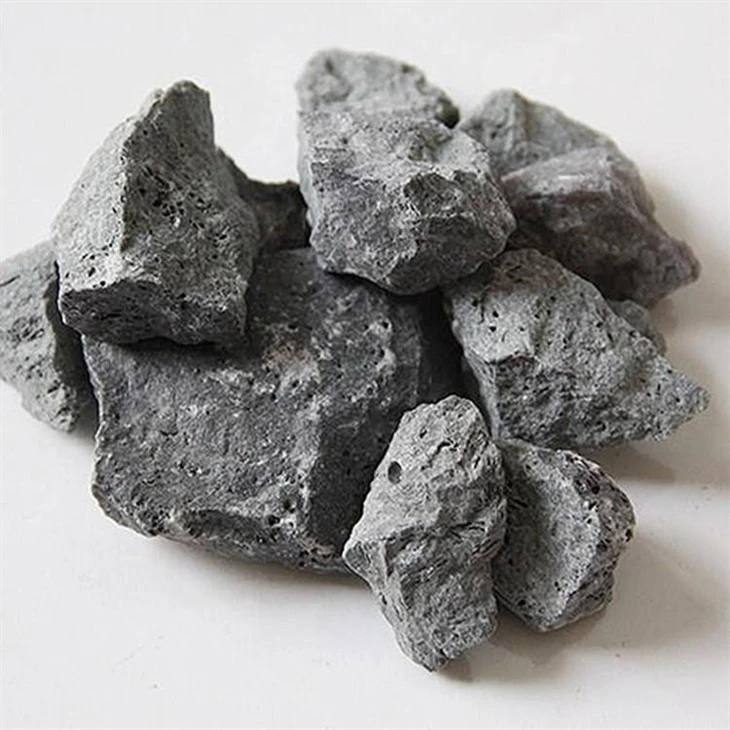
Silicon Metal Lump 553 Grade
With a controlled silicon content of ≥98.5%, this grade is designed for global B2B procurement teams that require a stable balance between cost efficiency and predictable metallurgical behavior in large-scale industrial applications.
High-Purity Industrial Silicon for Aluminum Refining, Silicone Synthesis & Metallurgical Applications
Silicon Metal 553 Grade is a core crystalline industrial material produced through high-temperature carbothermic reduction of high-purity quartz (SiO₂) in submerged arc furnaces (SAF).
With a controlled silicon content of ≥98.5%, this grade is designed for global B2B procurement teams that require a stable balance between cost efficiency and predictable metallurgical behavior in large-scale industrial applications.
In international trade practice, "553" refers to strict control of three key impurities:
Iron (Fe ≤ 0.5%), Aluminum (Al ≤ 0.5%), and Calcium (Ca ≤ 0.3%).
Maintaining stable control of these parameters is critical for ensuring consistent alloy performance and minimizing downstream processing losses.
Chemical Composition & Industry Compliance Standards
Our production system follows ISO 9001:2015, ASTM-aligned methodologies, and GB/T 2881 industrial standards to ensure repeatable chemical stability across shipments.
|
Element |
Standard Grade (553-M) |
Low-Calcium Chemical Grade (553-C) |
Test Method |
|
Silicon (Si) |
≥98.5% |
≥98.7% |
Difference Method |
|
Iron (Fe) |
≤0.50% |
≤0.45% |
XRF |
|
Aluminum (Al) |
≤0.50% |
≤0.48% |
ICP-OES |
|
Calcium (Ca) |
≤0.30% |
0.15–0.20% |
AAS |
|
Trace Elements (P, S, Ti, B) |
≤0.10% |
≤0.05% |
ICP-MS |
Lump Size Distribution & Physical Control
To ensure stable furnace charging behavior and minimize yield loss during handling:
Standard lump size
10–100 mm (≥90% within range)
Custom fractions
10–50 mm / 20–60 mm for automated feeding systems
Fines control
<5% below 10 mm at packaging stage
Controlled particle size reduces oxidation loss and improves silicon recovery rate in melting processes.
Key Industrial Problems Solved for Buyers
Silicon Metal 553 is not selected only by specification-it is selected to stabilize production processes.
Stabilizing Aluminum Alloy Quality
Variation in Fe and Al impurities can cause intermetallic formation in aluminum casting, leading to:
• Hard inclusions
• Machining defects in CNC processing
• Reduced mechanical consistency in alloys such as ADC12 and A356
Controlled silicon input ensures predictable alloy composition and stable melt behavior.
Reducing Slag Formation and Furnace Contamination
Excess calcium in silicon feedstock can increase slag volume and accelerate furnace lining wear.
Our controlled refining process limits Ca to ≤0.30%, reducing:
• Slag accumulation
• Furnace downtime for cleaning
• Metal loss during skimming operations
Improving Silicon Yield Efficiency
Fine particles generated during transport can burn off quickly during melting, reducing effective silicon recovery.
We reduce this risk by:
• Slow cooling crystallization to improve lump strength
• Controlled crushing to minimize micro-fractures
• Strict screening to reduce fines generation before packaging
Applications of Silicon Metal 553 Grade
Aluminum Alloy Industry (Primary Application)
Used in secondary aluminum refining and alloy adjustment to:
• Control silicon content in casting alloys
• Improve melt fluidity and casting performance
• Reduce shrinkage defects in die-casting products
Common applications include automotive components, engine housings, and structural aluminum parts.
Chemical Industry (Silicone & Silane Production)
Silicon Metal 553 serves as a raw material for:
• Methyl chlorosilanes
• Silicone polymers
• Silane coupling agents
Stable impurity levels are critical for maintaining catalyst efficiency and reaction stability.
Metallurgical Applications
Used as a deoxidizing and alloying agent in steel and foundry operations to:
• Remove dissolved oxygen in molten steel
• Improve cleanliness of steel matrix
• Enhance overall casting quality
Manufacturing Process & Technical Control
Our production process is designed to ensure consistency at every stage:
Quartz selection with controlled impurity baseline
Carbothermic reduction in submerged arc furnace (>2000°C)
Oxygen refining to reduce calcium and residual impurities
Controlled slow cooling to prevent element segregation
Crushing, screening, and dust-controlled packaging
Each stage directly affects melt performance and final silicon recovery efficiency.
Quality Assurance & Traceability
To ensure procurement reliability and batch consistency:
- OES and ICP-OES chemical verification for every batch
- Particle size analysis for each production lot
- Full batch traceability system from furnace to shipment
- COA (Certificate of Analysis) issued per container
- Third-party inspection available (SGS / BV / Cotecna)
This ensures that each shipment performs consistently in real industrial conditions.
Certificate


Packaging & Export Logistics
To maintain material stability during global transport:
1MT or 1.25MT jumbo bags with PE moisture barrier liner
Alletized container loading for stability during shipping
Controlled packing to minimize breakage and fines formation
Standard export documentation: MSDS, CO, and customs forms
Proper packaging directly influences furnace yield and handling losses.
FAQ
Q: Why is calcium content important in silicon metal?
A: Calcium affects slag formation and furnace wear. Higher Ca levels can increase slag volume and reduce metal recovery efficiency during melting.
Q: Can Silicon Metal 553 be used in silicone production?
A: Yes. However, low-calcium variants (553-C) are recommended for stable catalyst reaction conditions in chemical synthesis.
Q: What causes low silicon recovery during melting?
A: Common causes include excessive fines, oxidation during handling, unstable furnace temperature, and inconsistent raw material quality.
Q: How do you ensure batch consistency?
A: Through controlled raw quartz sourcing, standardized furnace operation, and full laboratory testing (OES/ICP) for every production batch.
RFQ – Technical Inquiry Requirements
To provide accurate quotation and technical matching, please specify:
• Application (aluminum / chemical / metallurgical use)
• Required grade (553 / 441 / custom specification)
• Lump size requirement
• Monthly or trial order volume
• Destination port and preferred Incoterms (FOB / CIF)
Hot Tags: silicon metal lump 553 grade, China silicon metal lump 553 grade manufacturers, suppliers, factory, Chemical Silicon Metal for Silicon Production, Crushed Metallurgical Silicon Metal, Low Aluminum Chemical Silicon Metal, Screened Silicon Metal, silicon metal 441, silicon per ton
Previous
Silicon Metal Lump 441 GradeNext
No InformationYou Might Also Like



Send Inquiry