


Silicon Metal Powder For Aluminum Alloy
Overview
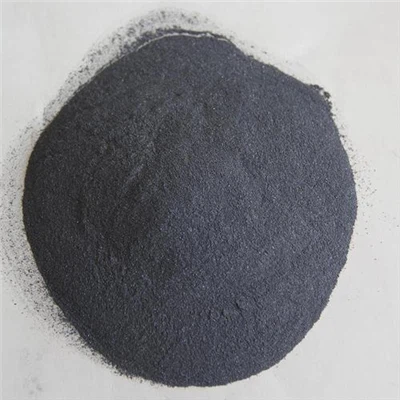
Silicon Metal Powder for Aluminum Alloy Manufacturing
Silicon Metal Powder is a key functional material used in aluminum alloy production to control composition, improve mechanical properties, and stabilize casting performance. In industrial applications such as foundry alloys, automotive parts, and aerospace-grade aluminum, even small variations in silicon behavior can directly affect density, fluidity, and final strength of the alloy.
Our silicon metal powder is designed for aluminum alloy systems where consistency in chemical composition and particle behavior is critical during melting and alloying processes.
Technical Specifications & Grade Matrix
In aluminum alloy production, trace elements directly affect mechanical strength, ductility, and casting stability. Our silicon metal powder is produced under controlled metallurgical refining conditions to reduce tramp elements such as Iron (Fe) and Calcium (Ca), which can contribute to brittle intermetallic formation, including β-Al₅FeSi phases in cast aluminum.
|
Element / Property |
Premium Automotive Grade |
Industrial Foundry Grade |
Test Method / Standard |
|
Silicon (Si) Purity |
≥ 99.50% |
≥ 98.50% |
GB/T 14849 / ICP-OES |
|
Iron (Fe) |
≤ 0.18% |
≤ 0.40% |
ASTM E1097 |
|
Calcium (Ca) |
≤ 0.02% |
≤ 0.05% |
ASTM E1097 |
|
Aluminum (Al) |
≤ 0.12% |
≤ 0.30% |
ASTM E1097 |
|
Oxygen (O) Content |
≤ 0.08% (Low-Oxygen) |
≤ 0.15% |
LECO Oxygen Analyzer |
Particle Size Distribution (PSD) & Dissolution Behavior
In molten aluminum systems, particle size distribution directly affects dissolution efficiency and stability. Fine powders may oxidize rapidly on the melt surface, while oversized particles can sink and create localized composition variations.
To address this, a multi-stage air classification process is used to control particle distribution.
Controlled PSD design based on end-use feeding method (vortex charging, pneumatic injection, or manual addition).
Fines content (<10 μm) controlled below 3%, reducing dust formation and oxidation sensitivity during handling.
Oversized particles removed to ensure consistent melting behavior and avoid unmelted silicon inclusions
Smelting Performance & Process Efficiency
For procurement and production teams, material value is determined by total process efficiency rather than unit price alone.
|
Process Metric |
Metallurgical Performance |
Operational Impact |
|
Silicon Recovery Yield |
95.5% – 97.8% |
Higher recovery compared to silicon lumps (~90%), reducing material loss |
|
Optimum Melt Window |
710°C – 730°C |
Compatible with standard ADC12 / A356 processing without additional furnace load |
|
Hydrogen Content |
≤ 0.18 cm³ / 100g Al |
Reduces gas porosity and shortens degassing time |
Standard Charging & Melting Procedure
To maintain stable dissolution and minimize oxidation loss, the following process is commonly used in industrial application:
Melt Preparation & Skimming: Bring aluminum melt to 715°C – 730°C. Remove surface dross before addition to ensure a clean melt interface.
Controlled Addition of Silicon Powder: Add silicon powder through vortex stirring or injection systems. Maintain steady feeding to avoid localized cooling or agglomeration.
Homogenization & Sampling: Stir for 10–15 minutes to ensure full diffusion. Perform OES sampling before final degassing and casting.
Industrial Applications & Compliance Positioning
This product is used in aluminum alloy systems where composition control and process stability are critical.
• Automotive die-casting alloys (ADC12, A380, A356).
• Structural aluminum components for transportation systems.
• High-performance aerospace aluminum systems (Al-Li, 2xxx, 7xxx series modification applications).
• Powder metallurgy feedstock for AlSi10Mg and related alloys used in additive manufacturing.
Compliance & Quality Framework
Production is managed under an ISO 9001:2015 quality system, with additional automotive-grade supply chain alignment under IATF 16949 requirements.
• RoHS & REACH compliant for industrial and automotive applications.
• Batch traceability maintained from raw silicon sourcing to final packaging.
• Anti-contamination processing using ceramic or polyurethane-lined milling and classification systems to reduce tramp iron risk.
Certificate


Packaging & Logistics Protection
Silicon metal powder is sensitive to oxidation and moisture due to its high surface area, particularly during long-distance transport.
Standard packaging options:
• 25 kg multi-layer paper-plastic composite bags with sealed PE inner liners
• 1,000 kg moisture-resistant jumbo bags for bulk handling
Optional protection:
• Argon gas flushing for low-oxygen grade requirements
• Vacuum sealing for fine powder grades
Shelf life is typically 12 months under sealed, dry, and temperature-controlled storage conditions.
FAQ
Q: What is silicon metal powder used for in aluminum alloy production?
A: Silicon metal powder is used as a controlled silicon source in aluminum alloy manufacturing. It helps adjust silicon content in molten aluminum, improving fluidity, reducing shrinkage defects, and enhancing mechanical properties such as strength and wear resistance in casting and structural parts.
Q: What silicon purity is required for aluminum die-casting applications like ADC12 or A356?
A: For standard die-casting applications such as ADC12, A380, and A356, silicon purity typically ranges from 98.5% to 99.5%. Higher purity grades are preferred when tighter control of iron and calcium is required to avoid brittle intermetallic phases and improve casting consistency.
Q: Why does particle size distribution matter in silicon metal powder?
A: Particle size directly affects how silicon dissolves in molten aluminum. Fine particles may oxidize too quickly, while coarse particles may not fully dissolve, leading to composition inconsistency. A narrow and controlled PSD ensures stable melting behavior and uniform silicon distribution in the final alloy.
Q: How does silicon metal powder affect aluminum alloy quality?
A: Silicon improves the fluidity of molten aluminum, reduces casting shrinkage, and enhances hardness and wear resistance after solidification. However, inconsistent silicon input or impurities such as iron can negatively impact ductility and lead to brittle phases in the alloy structure.
Q: What is the difference between silicon metal powder and ferrosilicon in aluminum alloy production?
A: Silicon metal powder contains a higher and more controlled silicon content with lower impurity levels, making it suitable for precision alloying. Ferrosilicon contains iron as a major component, which can introduce unwanted phases in high-performance aluminum alloys where strict composition control is required.
Hot Tags: silicon metal powder for aluminum alloy, China silicon metal powder for aluminum alloy manufacturers, suppliers, factory, carbide sheet, High Purity Silicon Granules, High Purity Silicon Metal Powder, Semiconductor Grade Silicon Metal, Silicon Metal for Semiconductor Use, silicon metal per kg
You Might Also Like




Send Inquiry