


Silicon Metal Powder For Aluminum Industry
In aluminum alloy production, its primary function is to precisely adjust silicon content and improve melt behavior. Unlike lump silicon or irregular scrap feedstock, silicon powder allows faster dissolution and more uniform distribution in molten aluminum, especially in high-volume casting operations.
Product Overview
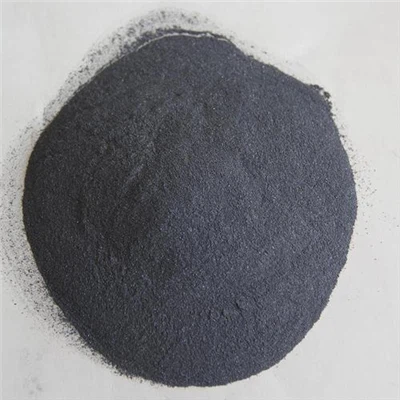
Silicon Metal Powder is a refined metallurgical material produced from high-purity silicon metal through controlled crushing, grinding, and air classification.
In aluminum alloy production, its primary function is to precisely adjust silicon content and improve melt behavior. Unlike lump silicon or irregular scrap feedstock, silicon powder allows faster dissolution and more uniform distribution in molten aluminum, especially in high-volume casting operations.
Each batch is produced under controlled processing conditions to ensure stable chemical composition, particle size distribution, and oxidation control.
Chemical Composition Specification
All values are tested per batch using ICP-OES or ICP-AES methods, with certificates of analysis (COA) available for every shipment.
|
Element |
Premium Grade (Automotive Casting) |
Standard Grade (Foundry Use) |
Test Method |
|
Silicon (Si) |
≥ 99.50% |
≥ 98.50% |
ICP-OES (GB/T 14849.4 / ASTM E1097) |
|
Iron (Fe) |
≤ 0.15% |
≤ 0.40% |
ICP-AES |
|
Aluminum (Al) |
≤ 0.10% |
≤ 0.20% |
ICP-AES |
|
Calcium (Ca) |
≤ 0.02% |
≤ 0.05% |
ICP-OES |
|
Carbon (C) |
≤ 0.03% |
≤ 0.05% |
LECO Analysis |
Why this matters in production:
Iron content directly influences the formation of brittle intermetallic phases in aluminum alloys, which can reduce ductility in casting products. Lower Fe levels help maintain more stable mechanical performance in structural components.
Particle Size Control and Process Stability
Available particle size ranges:
• 100 mesh / 200 mesh / 325 mesh / 400 mesh
• Custom D50 / D90 available upon request
Particle size is controlled through a multi-stage grinding and air classification system. This ensures consistent flow behavior during dosing and stable dissolution rates in molten aluminum.
Typical characteristics:
• D50 variation controlled within ±5%
• Reduced oversized particle fraction for uniform melting behavior
• Controlled fine powder ratio to avoid surface burning loss
Industrial relevance:
In aluminum melting systems, particle size inconsistency often leads to two issues:
• Coarse particles → Incomplete dissolution
• Excessive fines → Surface oxidation loss
Controlled PSD reduces both risks and improves silicon recovery efficiency.
Oxygen Control and Melt Efficiency
Silicon powder is highly reactive with oxygen and moisture. Exposure during storage can increase oxide formation, which reduces effective silicon content during melting.
To reduce this risk:
Controlled post-milling handling environment
Moisture-resistant multi-layer packaging
Optional inert gas (argon) protection for premium grades
Typical oxygen level:
≤ 0.5% (premium grade, measured post-packaging)
This helps reduce oxidation loss during charging and improves silicon utilization rate in aluminum melts.
Performance in Aluminum Alloy Systems
Silicon Metal Powder is widely used in controlled aluminum alloy production, particularly where composition stability is critical.
Aluminum-Silicon Casting Alloys (ADC12, A380, A356)
Used to:
• Stabilize Si content in molten alloy
• Improve fluidity during casting
• Reduce shrinkage defects in complex geometries
Automotive Structural Components
Applied in:
• Engine blocks
• Transmission housings
• EV structural castings
These applications require consistent mechanical strength, where small compositional variations can affect fatigue resistance.
AlSi10Mg Feedstock Production (Powder Metallurgy)
Used as a precursor material in gas atomization processes for additive manufacturing powders.
Process Behavior in Molten Aluminum
Based on industrial furnace observations at 710°C–730°C, silicon powder behavior is strongly influenced by particle size and oxygen exposure.
When properly controlled:
• Dissolution occurs rapidly under vortex or electromagnetic stirring
• Silicon recovery rate is significantly improved compared to lump silicon
• Reduced dross formation is observed due to lower surface oxidation
However, excessive fine particles without control may burn at the melt surface, reducing effective yield. This is why controlled PSD is critical in industrial applications.
Quality Assurance and Traceability System
Each production batch is fully traceable through a unique lot number linked to:
Raw material source batch
Production line and timestamp
Particle size distribution record
Chemical composition report
Quality documentation includes:
Certificate of Analysis (COA)
Material Test Report (MTR)
Optional third-party inspection (SGS / Intertek / BV)
All production processes operate under ISO 9001:2015 quality management system, aligned with automotive-grade supply chain requirements.
Certificate


Packaging and Industrial Logistics
To ensure material stability during long-distance transport:
25 kg moisture-resistant bags
1,000 kg jumbo bags for bulk handling
Multi-layer vapor barrier packaging
Optional vacuum or inert gas sealing for high-purity grades
Packaging is designed to minimize moisture absorption and oxidation during ocean freight and warehouse storage.
Engineering Notes for Smelting Operations
For optimal performance in aluminum melt systems:
Maintain furnace temperature between 715°C–730°C
Add silicon powder under controlled vortex or injection feeding
Ensure stable stirring for 10–15 minutes after addition
Avoid direct exposure of powder to open flame or oxidizing surface conditions
These conditions help maximize silicon recovery efficiency and reduce oxidation losses.
FAQ
Q: What is the advantage of silicon metal powder over silicon lumps?
A: Silicon powder provides faster dissolution and more uniform distribution in molten aluminum. This improves alloy consistency and reduces localized composition deviation, especially in high-volume casting systems.
Q: How do you control the purity consistency between batches?
A: Each batch is tested using ICP-OES analysis. Production is controlled under ISO 9001:2015 systems, and batch records are fully traceable. Variation in Si content is maintained within a narrow industrial tolerance range.
Q: Can you customize particle size distribution?
A: Yes. We can adjust D50 and D90 according to furnace type, injection system, or alloy requirements. Custom PSD curves are commonly used in automated dosing systems.
Q: How is oxidation prevented during shipping?
A: Products are packed in moisture-resistant multi-layer bags, and premium grades can be sealed under inert gas conditions to reduce oxidation during long-distance transport.
Q: Which aluminum alloys are most suitable for this product?
A: It is commonly used in ADC12, A380, A356, and AlSi10Mg systems where controlled silicon addition is required for mechanical and casting performance optimization.
Hot Tags: silicon metal powder for aluminum industry, China silicon metal powder for aluminum industry manufacturers, suppliers, factory, Export Grade Chemical Silicon Metal, High Density Silicon Metal Granules, Low Calcium Silicon Metal, Metallurgical Grade Silicon Metal, Silicon Metal for Chemical Industry, Silicon Metal Lump 553 Grade
You Might Also Like



Send Inquiry